

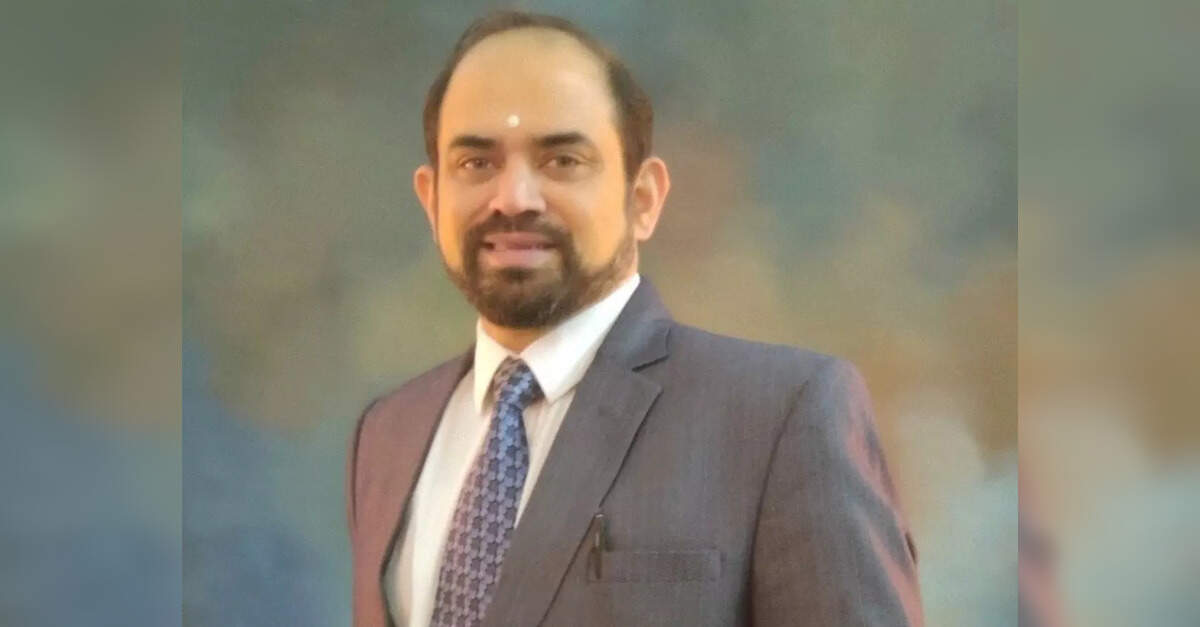
Dr. Ramakrishnan Raman, VC, Symbiosis International (Deemed University) Q. NEP 2020 promises greater autonomy and flexibility. In practical terms, where is regulatory reform still falling short for private and deemed universities?Dr Raman: The National Education Policy (NEP) 2020 provides a future-orientated framework which permits universities to operate with increased independence and operational flexibility, yet the complete rollout of this framework is proceeding at a slow pace. The policy seeks to establish streamlined regulations through its single “light-but-tight” system, yet most of the previous regulatory framework remains intact, especially the UGC-led supervisory structure. Multiple entry-exit options together with the academic credit bank system and credit mobility system require strong administrative and technological support systems, which universities currently work to develop, thus creating operational difficulties for private and deemed universities.The National Education Policy 2020 permits educational institutions to operate with more freedom, yet educational institutions must fulfill extensive compliance and reporting requirements, which prevents them from achieving true operational independence.Q. With foreign universities now being allowed to establish campuses in India, do you see this as collaboration, competition, or both for established Indian institutions?Dr Raman: The establishment of foreign university campuses in India creates educational institutions to work together while competing against each other. The higher education system will benefit from their collaboration, which includes joint research and dual degree programmes and faculty exchange and innovation development to establish international standards while enhancing academic performance.The competition becomes more intense because multiple internationally recognised universities have established their campuses throughout India. Students choose to study abroad because they want to experience different cultures, they want to enjoy a different way of life, and they want to find work opportunities in international settings which are impossible to find in their home country.Indian universities will raise their quality standards through foreign campuses, which will push them to develop new academic programmes, yet foreign campuses cannot provide students with the complete overseas experience because they lack essential components like cultural immersion and job opportunities. The success of these partnerships will determine how they impact India’s higher education system through their shared educational and competitive activities.Q. India aspires to become a global education hub. What structural and policy gaps must still be addressed to make this ambition realistic?Dr Raman: The educational hub ambitions of India show potential but need fast structural reforms that extend beyond academic institutions. The NEP 2020 framework provides strong support for implementation but its execution lacks consistency. India needs to implement comprehensive national reforms in order to transform its educational system into a credible global education destination which functions as an international educational institution.International students look for two things, which include safe environments and well-built infrastructure and high-quality living conditions, because these factors matter just as much as their academic performance. India must improve its urban planning and public transportation systems and housing options and digital infrastructure while making visa processes easier and establishing post-study work programmes and student assistance systems.True transformation demands that educational policy needs to become unified with governance frameworks and infrastructure systems and international standards.Q. India aims to achieve 50% Gross Enrolment Ratio by 2035. Is the higher education ecosystem prepared to expand at that scale without compromising quality?Dr Raman: India aims to attain its 50% Gross Enrolment Ratio (GER) target for 2035 through educational expansion, which requires innovative solutions instead of building infrastructure. Educational institutions need to develop both physical campuses and digital online programmes to meet their growth requirements while maintaining staff and financial support and educational standards. The recognition of online degrees as equivalent to offline programmes marks a turning point which enables cost-effective, accessible higher education that provides flexible learning options for diverse students.Institutions like Symbiosis School of Online and Digital Learning demonstrate how digital platforms can expand enrolment without compromising credibility. However, success depends on robust quality frameworks, faculty training, and effective digital pedagogy. If implemented well, the integration of online and blended models can help India achieve its GER target while ensuring higher education remains inclusive, affordable, and globally competitive.Q. As enrolments rise, how can institutions realistically address faculty shortages and strengthen research output to meet global benchmarks?Dr Raman: Universities need to execute complete institutional reform which will address their faculty shortfall issues and boost their research productivity. Universities can extend their hiring practices by using industry professionals as adjuncts and Professors of Practice while creating dedicated teaching and research career paths and establishing PhD-to-faculty programs through funded fellowship and postdoctoral opportunities.Faculty members can use technology and blended learning models to manage their time better because AI tools handle administrative tasks which allows them to concentrate on their teaching and research responsibilities.Research output will improve when institutions create dedicated research centers that support interdisciplinary work and provide rewards for grant acquisition and publication in high-impact journals.Q. With AI transforming the job market, are traditional degree models losing relevance? How should universities redesign curriculum and credential systems to stay future-ready?Dr Raman: The job market undergoes transformation through artificial intelligence which renders traditional degrees inadequate yet still maintains their value. Universities must evolve from fixed, content-heavy models to dynamic, capability-based frameworks that emphasize skills such as critical thinking, adaptability, and collaboration with AI. Educators need to teach AI literacy throughout all academic disciplines which include law, medicine, architecture, and literature. Students require essential training to succeed in their future professional environments.Higher education institutions should implement modular lifelong learning systems which enable students to earn stackable credentials while acquiring new skills throughout their lives. Educational assessment needs to transition away from memorization-based methods toward project-based, interdisciplinary, and portfolio-driven assessment methods. Educational institutions should foster human strengths because artificial intelligence lacks the ability to replicate ethical judgment, creativity, leadership, and systems thinking capacities.Degrees will maintain their worth only when they transform into dynamic credentials that demonstrate knowledge and skills in a world where AI technologies exist.Q. Can higher education reform truly succeed without deeper financial autonomy and governance flexibility for institutions?Dr Raman: The implementation of higher education reforms needs two essential elements to achieve success: complete financial independence and flexible control over institutional governance. The absence of tuition management rights and faculty salary control and funding distribution authority prevents universities from achieving their desired educational changes. Financial independence enables institutions to allocate their resources for two purposes: talent acquisition and strategic resource distribution and urgent needs management.Similarly, governance flexibility is important for innovation, research excellence, and responsiveness. Over-centralized control, political appointments, and rigid regulations often hinder agility. Different institutes combine their operational independence with government financial support and their achievement-based management system. India needs to develop reforms that match its particular context by establishing institutional boundaries while achieving national objectives of equality and educational excellence and international competitiveness. The higher education system will not undergo actual transformation until its reform efforts achieve a proper balance between their dual objectives.Q. Do private universities receive equitable policy treatment compared to public institutions, particularly in access to research funding and regulatory approvals?Dr Raman: The research funding and regulatory access rights, which public institutions in India receive, do not apply to private universities, creating unequal treatment between these two types of educational institutions. National funding organizations, which include SERB and DBT and UGC, maintain ownership-neutral policies in their official documents, but they show actual funding differences. The UGC Act Section 12(B) inclusion barrier prevents most public universities from receiving automatic access to central grants, while private universities must meet specific criteria for this funding opportunity.Public institutions obtain a competitive advantage through their superior research capabilities, government funding, and advanced infrastructure. The tuition fees of private universities serve as their main funding source, while they must navigate complex regulatory processes.NEP 2020 promotes equal opportunities for private organizations to participate in the educational system, yet existing structural and historical disparities continue to exist. Private universities face research and regulatory challenges because their operational equity exists only as a theoretical concept, which prevents them from achieving research and regulatory fairness.>
Published On Feb 16, 2026 at 01:02 PM IST
Join the community of 2M+ industry professionals.
Subscribe to Newsletter to get latest insights & analysis in your inbox.
All about ETEducation industry right on your smartphone!

